
Circular economy (E5)
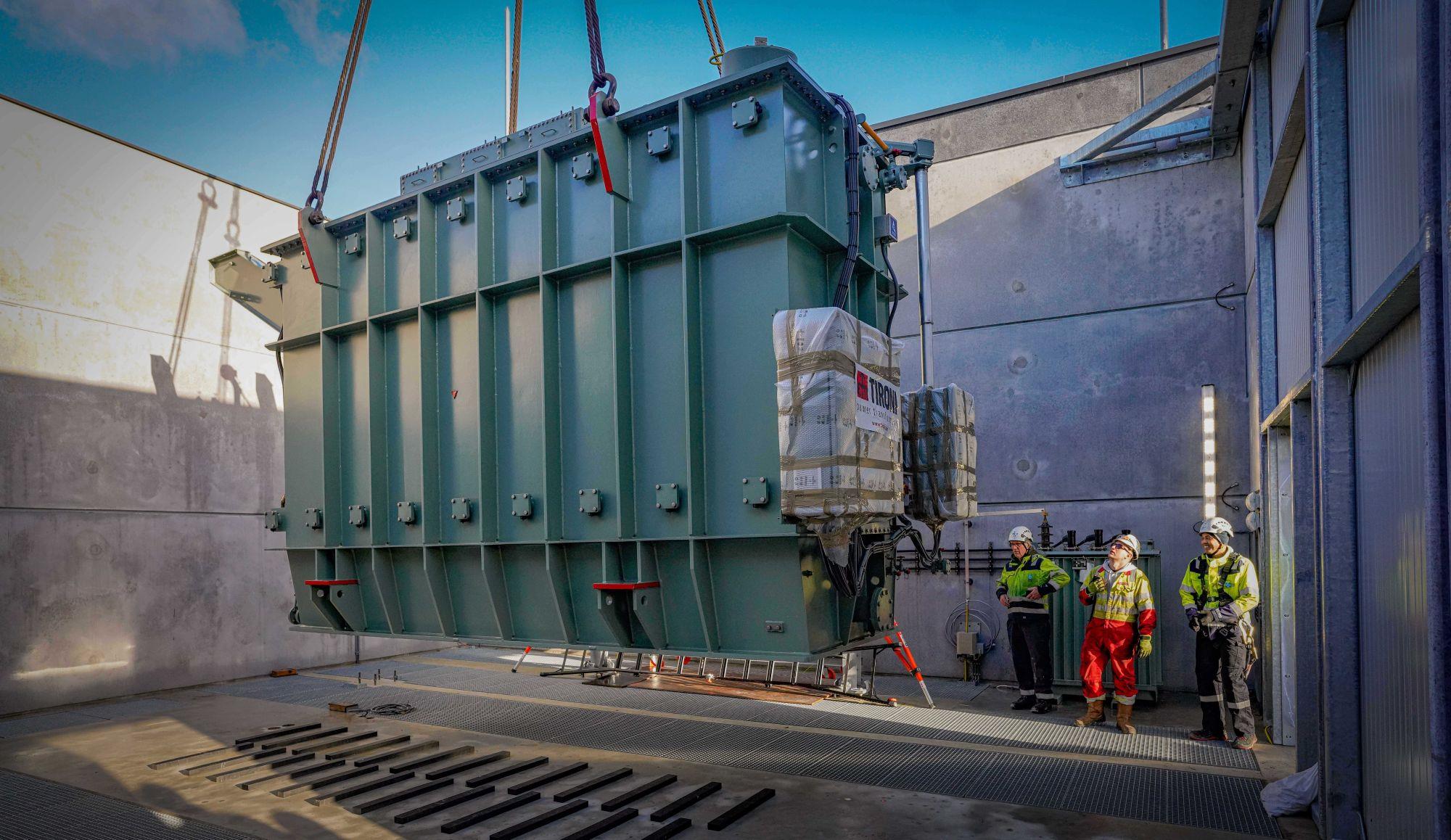
Achieving the energy transition will require a lot of (critical) materials such as copper, aluminium and plastic. These materials are scarce and increasingly play a role in geopolitical conflicts. For us as a network operator, they are indispensable in the production of cables, transformers and gas pipes. Prolonged shortages caused by supply issues or limited production capacity may affect our ability to complete the work package and potentially put pressure on our relationships with suppliers, which may result in higher costs.
Resource inflows and use
Inflow
Inflows include raw or processed materials that are required for the production of our most important components and equipment.
Impacts, risks and opportunities
Negative impact – Using materials makes a negative contribution to the availability of those materials.
Risk – A disruption in the supply chain due to material shortages and/or geopolitical circumstances could lead to higher material procurement costs.
Opportunity – Reusing materials and components in our operations and in the value chain, and collaboration between suppliers and network operators could reduce the consumption of (scarce) raw materials.
Opportunity – Through greater availability of materials and collaborations with suppliers and sheltered work enterprises for the repair and overhaul of equipment, we can reduce our vulnerability to disruptions in the international value chain. This would reduce purchases of new products and create cost savings.
Policy and approach
In 2025, Alliander developed a Circular Strategy that formulates an ambition, defines KPIs and sets targets. Circular procurement is one of the KPIs. The strategy is intended as a management framework to integrate circularity into the organisation. Alliander does not yet have a policy relating to circularity.
Given that Alliander did not yet have a formal circularity policy in place in 2025, further detail was added to the strategy to move towards developing a policy. This ultimately produced a policy plan for circularity that was approved by the Management Board in January 2026.
Raw material passport
To calculate our circular procurement of our core assets, we ask our suppliers to submit a raw material passport. We have not yet received raw material passports for all our core assets. A raw material passport specifies the quantity of each raw material in the product and the percentage that is recycled or otherwise reused or recovered. Raw material passports for cables are certified by Kiwa, whereby the suppliers themselves request certification. For other core assets, we validate the information provided by suppliers by performing audits. We also validate data from the passports, except those for cables, using the CE Delft method, which sees us check the data submitted by suppliers against a central database.
Reuse
Applying circularity measures to materials, such as reuse (after repair and overhaul), will increase the availability of our existing inventories. This will also improve our ability to anticipate the maintenance of outdated facilities that cannot yet be replaced or do not need to be replaced. Reuse of materials contributes to the feasibility of the energy transition and reduces costs over the long term.
The incomplete (un)coded material flow for grid components and tools is screened upon use by the Circular team. During the intake process we distinguish between product types and possible purposes. In so doing we follow the value chain, assessing suitability for:
Alliander
Other network operators
Suppliers
Commercial sales
Charities
If repurposing in one of these categories is not possible, the product is regarded as waste.
Actions
As well as pursuing circular procurement, we have also carried out other activities in relation to circularity.
Alliander is a member of the CEE (Circular Energy Economy) platform, which is a joint initiative by network operators, InvestNL and the FEDET industry association to promote circularity within the energy sector. One of the campaigns that CEE organised in 2025 was a sprint focused on the procurement of recycled aluminium for cables and recycled steel for distribution transformers.
We formulated the definition and terms of (potential) overhaul products and established a financial framework. In 2024, we set up a pilot project for overhauling multi-joints (gas couplings) with a sheltered work enterprise, who helped us with the cleaning, disassembly and reassembly. The supplier provided missing materials for this purpose. The pilot ultimately showed that over 90% of multi-joints are suitable for reuse. There are no new pilot results for 2025. A key takeaway from the pilot is that we only want to pursue overhauls when there is a clear business need. This aligns with the ‘Refuse’ step of the R-ladder method for a circular economy (‘Do we really need it?’). In collaboration with suppliers, we had 34 compact stations overhauled in 2025 (2024: 76). Such stations are made up of a reused transformer and switchgear (magnefix). We collect stations that come from the network and have them checked for reusability by a technical specialist. The numbers for 2025 are lower than those for 2024. We saw demand lag significantly behind supply. We developed an action plan and began implementing the improvement measures.
We created a circular materials warehouse in our inventory management system, which gives us better insight into our inventory, and we shared this with Liander Logistics and other parties. In 2024, we began introducing coded tools and so created a blueprint for the systematic introduction of other circular materials. The number of reused tools issued to operations totalled 3,102 (2024: 1,624).
Objectives and results in 2025
The circular procurement KPI shows which percentage of the materials we procure are recycled materials. Within the scope of this KPI, our core assets include low-voltage, medium-voltage and high-voltage cables, gas pipes, distribution and power transformers, (smart) electricity and gas meters, and switchgear. For 2025, the target is to procure 9% of our core assets from circular sources. In 2024, no target had been set yet for the proportion of procured materials that are recycled.
In 2025, we purchased 7.5% of our materials on a circular basis (2024: 6.8%). Among other things, we did so by including conditions in tender processes for cables and distribution transformers that were aimed at increasing the use of recycled materials and stimulating the market’s creativity regarding the development of circular materials. Alliander has set a target of 50% circularity in procurement by 2030. Based on the Circular Strategy we have designed, we are developing a roadmap and implementation plan outlining the actions needed to achieve the target.
The table below shows the total weight and the circularity of materials used:
|
Key components |
Total weight (tonnes) |
Circularity (tonnes) |
Circularity (%) |
|||
|
2025 |
2024 |
2025 |
2024 |
2025 |
2024 |
|
|
Cables |
18,856 |
18,911 |
1,746 |
1,165 |
9.3% |
6.2% |
|
Meters |
465 |
344 |
79 |
105 |
17.0% |
30.5% |
|
Pipes |
1,745 |
1,521 |
77 |
57 |
4.4% |
3.8% |
|
Transformers |
9,197 |
7,398 |
511 |
699 |
5.6% |
9.0% |
|
Switchgear |
1,818 |
1,289 |
- |
- |
0.0% |
0.0% |
|
Total |
32,080 |
29,462 |
2,413 |
2,026 |
7.5% |
6.8% |
The total volume of purchased products and materials is the total weight in tonnes of low, medium and high-voltage cables, gas pipes, distribution and power transformers, (smart) electricity and gas meters and switchgear purchased for our network management activities (electricity and gas). If the exact weight is wholly or partly unavailable, the weight is calculated on the basis of standard weights per core asset.
The weight of secondary reused or recycled components, products and materials is determined from the raw material passports provided by suppliers. If the exact weight is wholly or partly unavailable, the weight is calculated on the basis of current industry data per core asset.
The percentage of secondary reused or recycled components, products and materials is determined from the raw material passports provided by suppliers. If the exact percentage is wholly or partly unavailable, the percentage is calculated on the basis of standard weights per core asset.
To determine the weight of a core asset and the percentage of recycled materials, our suppliers provide raw material passports stating these weights and percentages. Item data for the purchased products is retrieved from SAP and then linked to the raw material passports. If a raw material passport is not available for products purchased from a supplier, the material’s weight is determined based on a raw material passport from a comparable supplier or, if necessary, determined based on data from SAP. This applies to a limited number of our high-voltage cables and some of our switchgear. In addition, the recycled content stated on the raw material passport is compared with data from independent research and advisory bureau DNV for verification purposes. To prevent overestimates, the lower of these two values is used in the calculation. If the raw material passport for an article is unavailable, it is assumed that the percentage of recycled materials is nil. This information is then used to calculate circularity.
Our plans
The year 2026 will be about operationalising our Circular Strategy. Life cycle analyses (LCAs) will be conducted for cables and transformers. Raw material passports will be available for over 90% of our core assets.