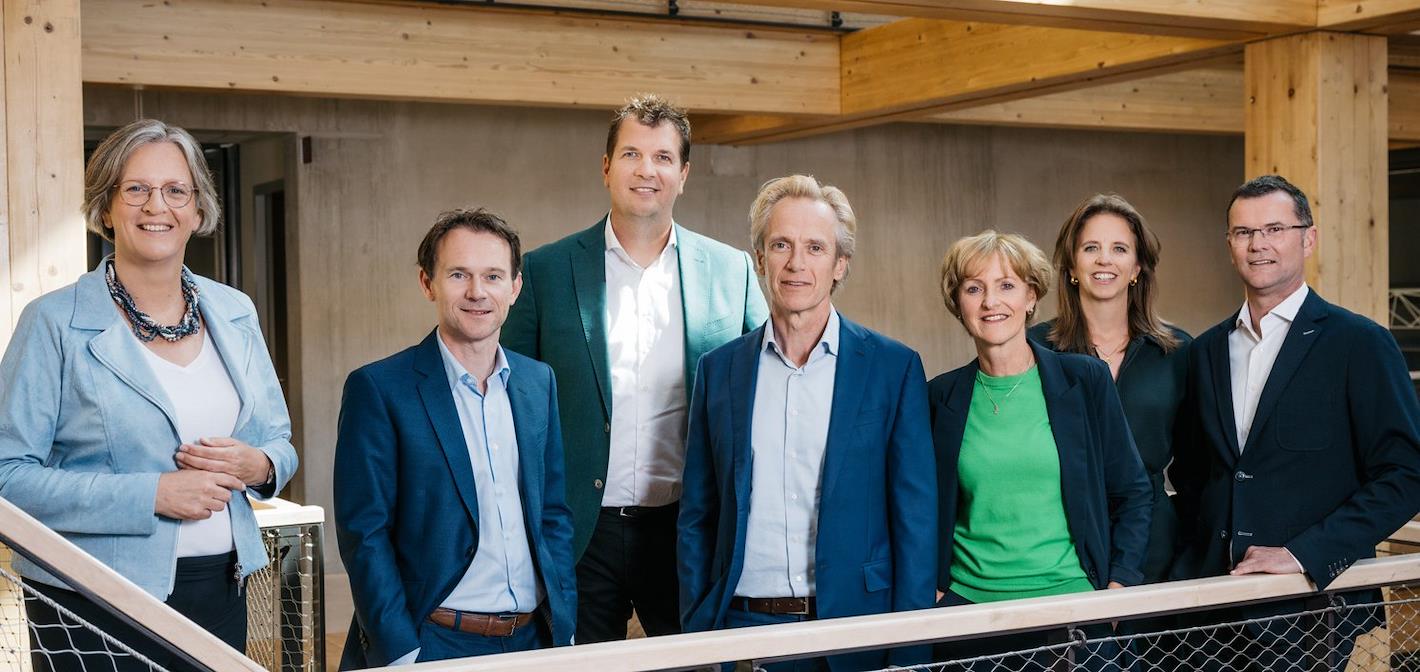
In 2025, the limitations of the energy system could be felt every day. What was long seen as a temporary strain on the energy system has now become an everyday reality. We were able to help many customers on the waiting list last year, but unfortunately also saw waiting lists grow in other areas. Businesses cannot always expand or establish themselves, homes are not connected everywhere in a timely manner and households are experiencing increasing uncertainty about energy availability. They all rely on an energy network that is changing faster than ever, and in which the available capacity varies greatly depending on location and time of day. This is happening at a time of increasing geopolitical uncertainty and instability. Conflicts and large-scale power outages in Europe highlight how important and how vulnerable vital infrastructure can be.
A future-proof energy system calls for clarity. It requires direction, choices and solutions that match local circumstances. Reliability, affordability, availability and sustainability must continue to go hand in hand in that system. We are fully aware of the context in which we operate and the impact this has on customers. It requires our organisation, people and partners to remain constantly focused on practical implementation and the consequences of our choices.
A future-proof energy system calls for clarity. It requires direction and choices.
Without choices, there is a risk of stagnation
At Alliander, we work on a single clear task every day: to provide a suitable energy solution for every customer in 2030. That is the mission we have set for ourselves. It requires us to deliver what we have agreed with each other and work on finding that solution and implementing it. Embracing responsibility and working in a results-oriented manner, and indicating what we need to create a successful solution for our customers.
But it also calls for realism: what is and what is not possible. A shortage of technicians, limited physical space, long permit procedures and nitrogen emissions regulations mean that we are unable to assist everyone immediately. Despite Alliander’s authority as a public network company, there are issues we are unable to or not permitted to resolve. However, we do have a responsibility to highlight the consequences of choices and to facilitate discussion on those choices. Customers want clarity. This requires decisions to be made, particularly by the authorities at a national, provincial and local level. Without progress on issues such as nitrogen emissions and new housing, investments and social developments will come to a standstill. The introduction of the new Energy Act in the Netherlands provides a future-proof framework for the energy transition, giving businesses, households and network operators more opportunities to use energy flexibly and make better use of network capacity. It also ensures that the exchange of data is well organised. As a sector, we view the government’s coalition agreement presented at the end of January as an olive branch supporting the energy system of the future. Many aspects of the improvements we lobbied for as a sector are addressed in that agreement, such as a diverse energy mix, smart use of the grid, energy as part of spatial planning and an approach to tackle the shortage of technicians.
In addition, we as an organisation do not shy away from making tough choices. We are building an even more customer-focused organisation by concentrating on what delivers the most value for customers. We are also improving the quality of our data so that we have an even better understanding of who needs what from us and when. This allows us to plan the work for customers and contractors more effectively. We have also adapted how we manage our organisation to achieve greater effectiveness and focus, in line with the objective we have committed to. By expanding the Executive Committee, we are strengthening our focus on implementation, digitalisation and upscaling. This helps us implement strategic choices more quickly and consistently in the practical environment of our customers and stakeholders, because the task we face requires both speed and consistency.
Record investments in expansion and upgrades
In 2025, we again invested significantly more – €2.1 billion representing a 19% increase compared to 2024 – particularly in our electricity and gas grids and district heating networks. We laid more than 2,600 kilometres of cables and built and renovated over 2,200 transformer substations. We laid more than 300 kilometres of gas pipeline. One significant development was the decision-making relating to the Dutch Collective Heating Supply Act, which facilitates the construction and development of district heating networks. But much more will be needed over the next decade. An indication: 37,000 kilometres of cables, 1,600 kilometres of gas pipeline, 25,000 transformer substations, 1,000 kilometres of district heating pipeline.
Flexibility is no longer a secondary consideration
Construction alone is not enough. The demand for electricity is growing faster than we can expand the grid. In 2025, we focused strongly on using the grid more intelligently and efficiently in order to connect more customers. Rather than being a secondary consideration, flexibility is now a prerequisite for a reliable grid. It is needed to keep energy affordable. This requires a different mindset from us and our customers, and greater partnership, which we are managing more and more often. Together with businesses and households, we are exploring how their energy usage can be better matched to the available capacity. In 2025, we helped nearly 2,000 customers get off the waiting list. In our area-based approach, we work with customers to identify what is needed and possible in their area as a whole. Together with other network operators and energy suppliers, we also launched an initiative to encourage households to use energy more flexibly in exchange for financial compensation.
Flexibility is a prerequisite for a reliable grid and for keeping energy affordable.
Collaboration with our stakeholders
All the results paint a clear picture: without collaboration we will not be able to take the next step. In 2025, we worked closely with municipal and provincial authorities on energy-focused urban planning and area visions, with energy increasingly becoming a factor that determines structure. Significant progress has also been made in collective solutions, such as district heating networks and energy hubs. Customers, public authorities, regulators, market parties, contractors and municipalities are indispensable partners for us. Together, we make targeted and concrete choices about the use of space, infrastructure and flexibility. Every day that we can work faster together means greater social value: for making the Netherlands more sustainable, for economic development and for living comfort.
Safety as a prerequisite in everything we do
We only work when it is safe to do so. We operate in a complex and high-risk environment and are ultimately accountable in respect of our employees, partners and society as a whole. This means that we do our utmost to ensure that everyone gets home safely. In 2025, we continued to invest in our safety culture and in strengthening safety awareness and promoting safe behaviour. Among other positive benefits, this resulted in employees reporting unsafe situations more frequently. However, despite our efforts, we were unable to prevent some accidents. Every incident is still one too many.
In addition, we are continuing to invest in the resilience of our infrastructure and IT systems. Large-scale power outages, such as those that occurred in Spain and Portugal, sabotage of the energy network in Berlin and the attempts to hack Polish energy sources last year demonstrated how important and how vulnerable energy infrastructure can be. These events underline the importance of a reliable, secure and resilient energy system. Safety is never 'finished' and requires constant attention, especially during a period of high work pressure and rapid scaling up.
Financial figures at a glance
We achieved a net profit of €289 million in 2025, compared to €976 million in 2024. Excluding exceptional items, the net profit for 2025 amounted to €219 million (2024: €197 million). Operating income for 2025 came in at €3.3 billion (2024: €3.1 billion). The negative cash flow, without including incidental revenue, amounted to €1.3 billion in 2025 (2024: €1 billion negative), which was financed through (hybrid) bond loans issued in 2025.
Growth within limits
The energy transition requires not only technical input, but also people and collaboration. Our organisation grew to around 10,800 colleagues (+10%), partly due to the recruitment of hundreds of new technicians. In addition, we increased contractor capacity and introduced a new market approach that is better aligned with regional contractor practices and offers them attractive work packages. We are now reaching the limits of this growth. Technicians are scarce and need to be trained, and that takes time and capacity. So more growth does not necessarily always lead to a better result. We are committed to smarter ways of working, efficiency and innovation, so we can make the best use of everyone's time, talent and energy, and achieve our customer goals.
Word of thanks
In this annual report, we review and evaluate the measures we implemented in 2025. At the same time, we look to the future. The energy system of the future requires permanent investment, clear choices and close collaboration. Everyone needs to be able to continue purchasing and using energy, both customers with ample resources and those with the tightest budgets. Alliander embraces its responsibilities in that respect – with realism and confidence in what we can build together.
We would like to thank all our colleagues for their contribution to the results that have been achieved. Every day, under pressure and in a complex environment, they deliver exceptional professionalism for our customers. We would also like to thank our customers, public authorities, regulators and social partners for their engagement and willingness to make choices. Only by using energy intelligently together can we build an energy system that will help the Netherlands progress forward.
Management Board, 6 March 2026
Maarten Otto (CEO)
Walter Bien (CFO)