


Why this topic is important
Our energy infrastructure is the stable foundation stone underpinning society and the basis for the issues we face together, such as energy independence, new housing and decarbonisation of industry. Studies conducted by parties such as the Dutch government, the IMF and consultancy firm BCG show that investments in infrastructure have a significant impact on the economy. The spin-off effect is significant: companies flourish, and ultimately the entire economy and earning capacity of the Netherlands grow. At the same time, the energy transition requires the right choices to be made: the energy system must be future-proof and remain affordable. To bring the capacity of the energy networks in line with our customers’ demand, we are working on various ways of making the energy system future-proof. And we are getting results: at 99.99% availability, our energy networks are still among the most reliable in the world. In 2025, the supply reliability of the network remained at this extremely high level. Just like in 2024, the timely connection of customers and expansion of the networks are under pressure. Because of this, we are working on ways of reducing demand for power, making better use of our grids and completing more work. In this section, we report on our activities based on the ranking of our customer-focused strategic pillars.
Our performance
|
Access to energy with high reliability at the lowest possible cost |
|||
|
KPI |
Target for 2025 |
Performance in 2025 |
Target for 2026 |
|
Electricity outage duration |
Maximum of 26 minutes |
23.6 minutes |
Maximum of 26 minutes |
|
Unresolved valid voltage-related complaints |
Maximum 5,601 |
5,549 |
Maximum 6,346 |
|
Number of transmission restrictions |
Maximum 8,535 |
7,044 |
Maximum 10,025 |
|
Customer convenience (% effort) Private Customers |
Maximum 17% |
15% |
Maximum 16% |
|
Customer convenience (% effort) Business Customers |
Maximum 22% |
32% |
Maximum 30% |
|
Customer convenience (% effort) Maintenance & Outages |
Maximum 9% |
9% |
Maximum 9% |
|
Customer convenience (% effort) Large Corporate |
Maximum 30% |
33% |
Maximum 35% |
For a detailed report on our performance, please refer to the Objectives and performance section.
Supply reliability of the electricity and gas network
In 2025, our customers were without electricity for an average of 23.6 minutes (2024: 24.6 minutes). This means that the annual outage time is below the target of 26 minutes and roughly 4.1% lower than in 2024. There were 5,549 unresolved voltage-related complaints (target: no more than 5,601). During the relatively warm months, more voltage-related complaints were reported, resulting in an increase in the total number of voltage-related complaints.
Gas outages are relatively uncommon. The main cause of fluctuations in the gas outage duration are ad hoc outages caused by a third party, for example, during excavation work, which often leave customers without gas for a while.
Causes of outages of the electricity and gas network
Electricity
Gas
Customer convenience
The key factor determining customer satisfaction is their perception of convenience in their contacts with parties such as our technicians and our Customer Contact Centre. Immediately after completion of a job, we ask customers for feedback on our services. In 2025, the results for customer convenience varied across different domains. The customer score for maintenance and faults is in line with the norm. This also applies to small-scale consumers, where we achieved stable telephone accessibility and intend to further improve this aspect by introducing WhatsApp as an information channel. Larger business customers, on the other hand, experience more difficulty than we would like. In the large-scale consumer category, the score of 32% is lower than the norm of 22%. This was mainly due to capacity bottlenecks, complex implementation processes and long lead times. Within Large Corporate, the score is 33%, which is below the norm of 30%; despite visible improvements in the chain and accessibility, external factors and low customer response continued to negatively influence the result.
More information about this topic in the sustainability statementReducing demand
In 2025, we engaged in initiatives to better manage the growth in demand for transmission capacity. Through these initiatives, we prevented the increase in supply shortages as much as possible and encouraged behavioural change and energy awareness.
Energy-focused urban planning
Energy and space are inextricably linked. Through early and frequent consultation with authorities and market parties, we ensure that new developments fit within the energy system and accelerate the implementation of projects. Alliander urges municipal and provincial authorities and other parties to connect plans, opportunities and expectations – from the national vision down to district level – and to optimise investments. Energy is increasingly becoming a determining factor in spatial planning choices. Because each region and district has its own characteristics, this requires customisation in the solutions we put in place. This allows us to optimise our investments and work in a more targeted manner, with the highest priority given to areas where the top-bottom dynamic is high. But it also helps us to avoid building unnecessary infrastructure in areas where spatial planning regulations mean that permits will not be issued for developments.
Energy-efficient and grid-friendly new construction
With design principles such as peak load spreading, local generation and collective buffers, we want to create districts that require significantly less grid capacity. In the new ‘Neighbourhood Budget’ (Buurtbudget) concept, each district receives its own energy capacity budget, managed by a local system operator. This allows the connection of more homes within the existing capacity. In the ‘Balanced District’ (Balanswijk) concept, we are developing integrated solutions for energy, health, green spaces and water. This project was nominated for Change Inc.'s 2025 Transition Awards.
Energy Awareness Platform
The Energy Awareness Platform (Platform Energiebewustzijn) increases the public’s understanding of energy consumption and its impact on people, society and the planet. It does this for organisations working to make the Netherlands a sustainable country. The platform encourages the reduction of energy usage and a better spread to keep the energy transition achievable and affordable. Last year, the focus was on data usage, shared mobility, carbon-neutral energy and design principles in business parks and in districts. In addition to Alliander and Stedin, the national government will also enrol as a partner from 2026 onwards.
Completing more work
Last year, we once again worked hard for our customers in our service area to upgrade and expand our electricity network and make our gas network future-proof. In 2025, we laid more than 2,600 kilometres of cables (2024: approximately 2,300), built approximately 1,500 transformer substations (2024: approximately 1,100) and converted around 700 (2024: 950), and we replaced 148 kilometres of gas pipeline (2024: 156). We are proud that we succeeded in completing more work by expanding our capacity and increasing productivity. But we did not build as much as we had planned. The main reasons were a structural shortage of technicians, a lack of physical space for expansion and upgrading, long lead times and the considerable coordination required to obtain permits. This situation calls for collaboration at all levels along the supply chain – within Alliander, with our contractors and suppliers and as a sector – to channel our efforts into increasing productivity, further improving processes and finding solutions to speed up procedures. To achieve this, we require assistance from local, regional and national authorities, as well as our collaborative partners.
Scaling up capacity
Last year, we further expanded our workforce to approximately 10,800 employees, including 490 new technicians. We were also able to replace many technicians who retired. Recruitment is not the end of the story though: onboarding, training, educating and retaining technical talent are also important. We are working to improve the quality of our training and education programmes and use innovative methods to keep the duration of those programmes as short as possible without compromising quality. We do this to ensure that our technicians continue to develop, retain the right skills and develop new ones.
Contractor capacity was also increased. We aim to increase that capacity further through the ‘market-oriented approach’. This is a tendering strategy that entails offering attractive work packages on the market and that ensures good alignment with the regional organisation of contractors. We are making scaling up more attractive for our partners and acting to make working with us easier and more predictable. The first tenders under the new approach will start in 2026.
We are working on solutions to obtain space and permits for construction more quickly than is currently the case. In 2025, for example, we drew up agreements for work on the low-voltage grid, incorporating the process for obtaining permits into the planning cycle, which structurally leads to faster implementation and better collaboration with municipal authorities. In the future, we will extend this working method to other work packages.
We expanded our workforce by taking on staff, including 490 new technicians. Contractor capacity was also increased.
Increasing productivity
Back in 2024, we organised ourselves in production chains in order to coordinate all the activities required to work efficiently and deliver customer value more quickly. A new value chain was also set up for large-scale expansion work that we organise in long-term collaboration with implementation partners: the Large Work Packages chain. In 2025, implementation of working in chains was further consolidated, and a great deal of work was done in the chains to increase productivity and continuously improve our service provision.
We now also plan and manage our production in an integrated manner in order to increase productivity. All the activities in the implementation chain are planned and managed as a whole, rather than by department, team or type of work. This leads to the creation of a single, coherent and optimised plan to which all chains are linked. We do this eight quarters in advance.
Utilising the available capacity as efficiently as possible and achieving productivity increases are crucially important for Alliander. We do this in a data-driven manner. Two digital solutions for assigning work across the chain, optimising schedules and better matching supply and demand have been scaled up to all areas of work. We are also working on improvements to optimise the important role of the work supervisors.
More effective grid use (flexibilisation)
Our aim is to get the most out of the grids through flexible grid use. We refer to this as ‘Beter benutten’, i.e. more effective exploitation, and this is an essential aspect of the energy system of the future. More effective exploitation can be achieved through technical measures, but also through tariff models and usage incentives. Calculations show that these measures make a significant contribution to moderating the investment requirement for the onshore grid. Despite the steps we are taking, we recognise that acceleration is required. We are working on this continuously. In the enormous task we face, we are encountering various challenges. Among other things, it requires the introduction of new processes and IT systems. In addition, new technologies, changing legislation and growing demand for electricity require us to constantly make adjustments.
In 2025, we helped 1,961 customers get off the waiting list. This involved 912 resolved and 1,049 cancelled transmission restrictions. We also added capacity to the grid and made it available to customers by allowing a heavier load on the grid. Flex contracts are used where the grid requires this. To apply flexibility and limits responsibly, we are improving how we measure things. Last year, we performed several thousand low-voltage measurements and measured flows at a large proportion of the substations. These measurements help us to understand what is happening in our network and better respond to the needs of our customers.
Area-based approach
In our area-based approach, we offer all business customers in a given area a suitable flex solution. We do this in close collaboration with these customers and the local authorities. By addressing areas in their entirety, we can deploy more capacity and immediately leverage all possible solutions in that area. Together with local authorities and customers, we look at where we can help customers reduce the peaks. We can then use the resulting available capacity to make an offer to customers on the waiting list. Together with the customers on the waiting list, we investigate whether we can realise their sustainability plans or expansion through limited access. The area-based approach got off to a promising start in 2025. The first half of the year was dominated by development and set-up. In the second half, scaling up really took off:
We started implementing the approach in 19 areas, and 2 of these projects have been completed (Drachten, Nijmegen).
We issued nearly 400 offers and in more than 100 of those cases customers have already been contracted and assisted.
In the last quarter of 2025, we sent an average of 30 offers per week. In view of the improvements we are continuing to implement, this number will increase further.
In the areas where these projects are currently ongoing, we are providing assistance to 1,800 customers.
New tariff models
In order to distribute grid capacity more fairly and efficiently, we are working on time-dependent capacity and time-dependent tariffs for large consumers. In 2025, the design of these tariffs was finalised and the code amendment proposal prepared. We also developed a plan for time-dependent tariffs for small consumers in collaboration with the Dutch Ministry of Climate and Green Growth and Energie-Nederland. This new approach encourages customers to spread their consumption more during the day by offering lower tariffs at off-peak times and higher tariffs at peak times.
’A new tariff model encourages customers to spread their consumption more during the day.’
Capacity management contract
In 2025, we introduced the new capacity management contract. This involves entering into contracts with customers to temporarily purchase or feed in additional or reduced amounts of electricity at an appropriate fee, at times when the grid requires it. This expansion of our tool kit increases the likelihood that we will be able to find a suitable solution, even in difficult situations.
Technical measures: allowing heavier loading
We are taking action to safely transmit more electricity in the existing grid. In 2025, various policies were drawn up, including one that allows cyclical loading of medium-voltage cables, making hundreds of megawatts of additional integration capacity available within the limits of the safety and service life frameworks. Cyclical loading is a method that allows more load on the grid components during peak times, because we no longer adhere to static load limits. When the load is lower, components can cool down and we use these periods to make additional transmission capacity available within the permitted limits in terms of grid safety and grid service life.
In addition, variable voltage control (known as compounding: automatically adjusting the voltage of the grid based on the current load) has assisted dozens of customers without any additional infrastructure. We are also exploring greater use of the reserve capacity in the medium-voltage and high-voltage grids for customers that generate electricity. This makes it possible to connect these customers after all and transmit sustainable energy for most of the year. The risk associated with using this reserve capacity is limited, as we make agreements with these customers regarding matters like switching off their installations in the event of faults elsewhere or maintenance.

Royal Berry: we can actually create capacity
’The technical connection is in place, but we are not allowed to use the power,’ says Jan van Genderen, the owner of strawberry grower Royal Berry. Due to congestion, his contracted capacity was unexpectedly not increased in 2022, despite earlier agreements. ’At first I thought: OK, we have a red light for a bit, but it will jump to green soon. Three years later, it is still red.’
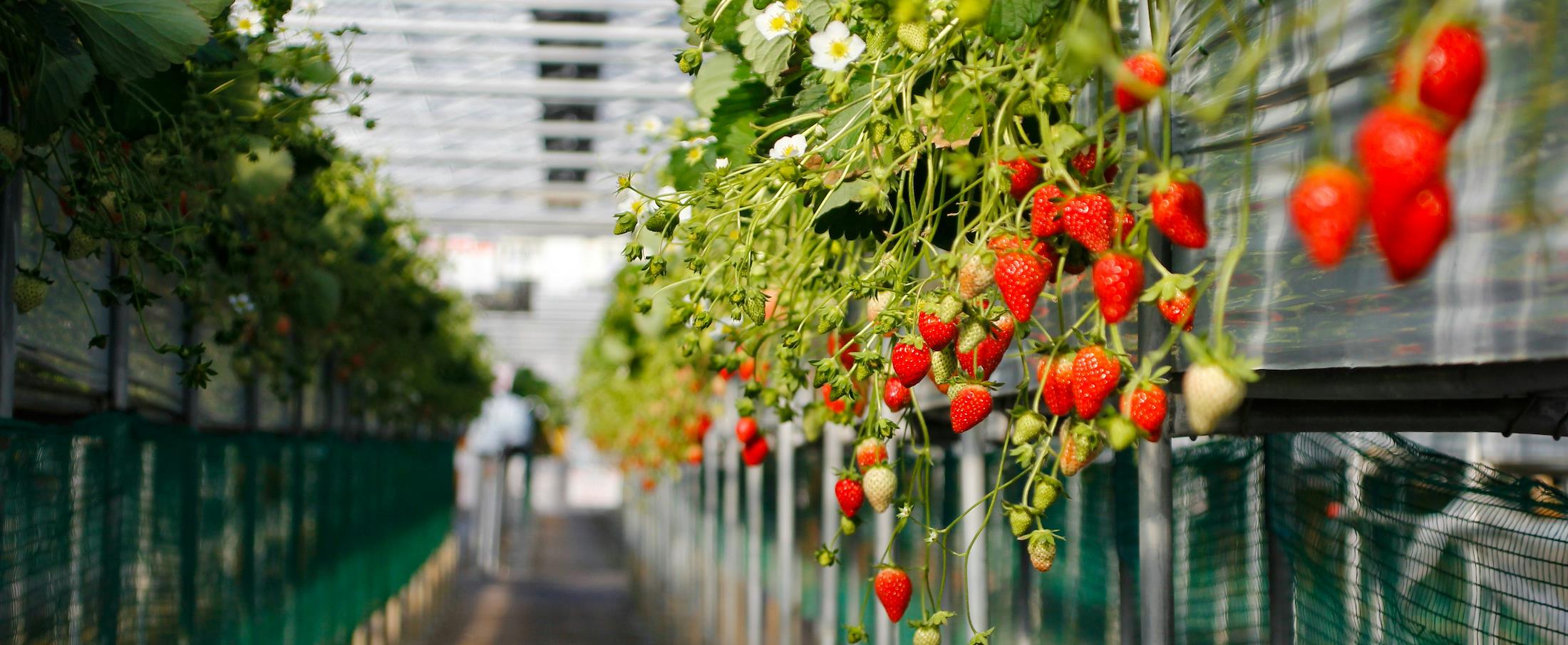
Jan points out that Royal Berry can actually help reduce grid congestion. The greenhouses run on combined heat and power: ’We only feed back into the grid when demand and the price are high. When supply is abundant, feeding back into the grid makes no sense for us. You would have thought that would help.’ Despite this, the new connection remains unused. ’There is a risk of overloading if customers feed in their capacity during periods of oversupply. But there is no incentive for us to feed electricity back into the grid when the price is low. I believe we can easily come to an agreement on this.’
He characterises the collaboration with Liander as good, but feels that the system is hindering progress. ’There is no contract form yet for what we want. The possibilities are there, the technology is there, but no one has fleshed out a suitable approach yet.’ What needs to change? ’Open up opportunities through clear agreements. Electricity is no longer something you can take for granted; we need to collaborate by taking advantage of what is possible.’ Jan remains optimistic. ’I’m sure a solution will be found. We are participating in a pilot project run by Liander. The important thing is to keep on making progress.’
Proactively communicating with customers
Access to energy does not depend solely on the technical side of our work: what we build and how we use our networks. For a network operator, proactive communication is essential for building trust, managing expectations and promoting collaboration. Communicating on investment plans, network capacity and future expansions in a timely manner will allow municipal authorities, businesses and residents to make better plans. Customers also increasingly have contact with us. In these interactions, they want to be heard and assisted, to know where they stand, even if something is not possible, to be given options for action and to experience convenience. Proactive communication helps to limit costs to society, increase understanding, promote collaboration and make the network future-proof.
Improved communication on Liander.nl
One of the most frequently used communication channels is Liander's website. That website was improved in a number of areas in 2025. Introduced last year, we now automatically display a summary page listing current projects for each location. The content of the individual project pages is managed by the engagement and stakeholder managers. For example, they can also include a link to the BouwApp, which connects them directly to the stakeholders in their project.
In addition, we worked on Liander.nl to improve the integration of the decision-making tool for small consumers (Keuzehulp voor kleinverbruik), the power grid checker (Stroomnetchecker) and the voltage problem checker (Spanningsproblemenchecker). This means that, rather than having to switch between different tools, customers now receive all the information in a single overview.
Development of infrastructure for heating and sustainable gases
Heat and sustainable gases play an important role in the future energy system, specifically as a complement to electrification. Heating solutions and sustainable gases can help spread energy demand, reduce peak loads on the electricity grid, enable more efficient use of existing infrastructure and avoid investment.
Heat
District heating networks ensure optimal use of sustainable resources at the lowest cost to society. Our subsidiary Firan is working on the development of new, local sources of heat and further decarbonisation of the network. In Amsterdam North, for example, work began in 2025 on the construction of a district heating network that uses waste heat from sewage water – the first system of this type in the Netherlands.
In 2025, in preparation for the entry into force of the new Dutch Collective Heating Supply Act, we launched the process for transforming Firan into an integrated heating company, effective from 1 January 2026. This new heating company will play a central role in the development of public district heating networks and will not only construct infrastructure, but also supply heat to business customers and households. This step requires a modified legal structure and clear positioning within Alliander, including the establishment of Alliander Warmtebedrijf and Firan Warmte-servicebedrijf.
Sustainable gases
Sustainable gases are a solution for making the use of gas greener. They can be deployed flexibly and help ease the pressure on the electricity grid. Through the use of sustainable gases, the gas grid retains (part of) its function.
The energy portfolio has sparked greater collaboration in Drachten
For local council member Maria le Roy of the Frisian municipality of Smallingerland, the energy transition starts with collaboration and a willingness to help each other. ’I see this very clearly reflected in our largest city, Drachten.’ The companies located in one of our business parks there have launched a trial programme to test an energy management approach. Together with the municipal authority and Liander, they have made agreements on smarter use and storage of energy at the business park. ’That required a leap of faith, but it worked: existing businesses were able to become more sustainable, freeing up supply for new businesses, despite the limited grid capacity.’
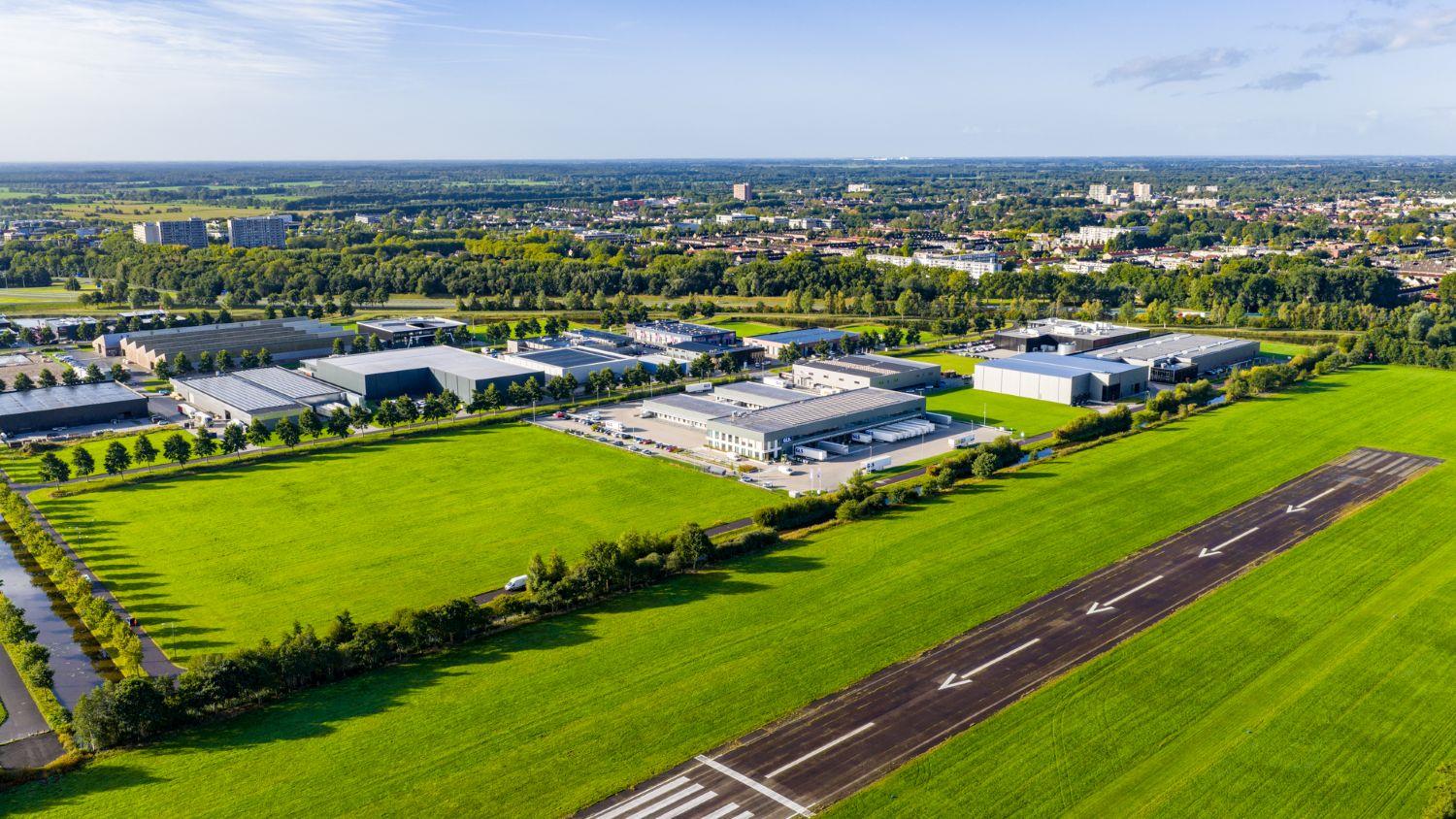
In households, most of the energy demand is for heating, Le Roy adds. ’As the municipal authority, we have been working on the development of a district heating network for some time now. By using waste heat from the water treatment plant, we can connect parts of the city to a district heating network and simultaneously reduce the load on the electricity grid. Here too, we are working closely together with Liander, discussing at an early stage what this means for the infrastructure. In addition, we will be replacing roughly 112 kilometres of sewage pipes over the next ten years, which will involve excavation work in many streets. This will be a stressful period for residents, so good coordination is absolutely essential in order to combine the excavation works with Liander's scheduled work and minimise inconvenience. We hope to work together effectively to get the job done!’
Le Roy sees the collaboration with Liander as a genuine partnership. ’Both from our perspective as a government authority and in the day-to-day collaboration with our civil servants. We help each other reciprocally. I can also see that Liander is facing major challenges, due to the shortage of technical staff for example. That is precisely where opportunities for collaboration exist, for example, with our strong education cluster and training offer for technicians. Thanks to that collaboration based on trust, I am convinced we can make rapid progress in this respect.’
Hydrogen
In June, Firan signed a collaboration agreement for a detailed hydrogen network design with the Port of Amsterdam. Hydrogen supply for the decentralised network started in Deventer. The intention is to connect it to the national hydrogen network. In Lochem, we completed a successful, long-term pilot project involving hydrogen. The main conclusion of this field trial, the first of its kind in the world, is that the existing natural gas network is suitable for distributing hydrogen.
Green gas
In 2025, 31 green gas providers fed 79 million m3 of green gas into Liander's network (2024: 82 million). This represents 1.5% of the total amount of gas transported. Seven new green gas providers were connected. Various factors are inhibiting the growth of green gas: the issue of permits for new fermentation plants has almost come to a standstill due to the nitrogen emissions crisis, obtaining an electricity grid connection for green gas installations is difficult due to grid congestion, and the cost of disposing of the residual product from fermentation is high. Nevertheless, we have launched many activities to facilitate the growth of green gas. One example is a trial in which a customer of Gasunie Transport Services receives green gas directly via Liander’s network without using an expensive booster.
Sharing data and new market services
Digital data exchange is crucial for the energy market. We facilitate sharing measurement data for accurate billing, the registration of generation installations and the coordination of customer requests for connections. However, the transition to a climate-neutral energy system also requires data for purposes such as optimising networks, collaborating with customers and stakeholders, opening up a broader perspective for future action and making better choices in that collaboration. By sharing data with them, they become full partners and can contribute more effectively to solutions, better anticipate opportunities and assess impacts. Together with our industry peers, we are continuously working to develop new, uniform data products. The ‘Buurtnet’ and ‘Netburen’ apps are examples of these. Buurtnet, launched by Alliander, Stedin and Enexis, is available to residents of a number of selected residential districts affected by grid congestion. The app provides information about the grid load in those districts and helps residents time their energy usage better. By providing products of this type, we offer our customers greater insight and scope for action.
Digitalisation
Digitalisation is essential for making the energy system more sustainable. It supports better utilisation of the energy network through new solutions for flexible transmission capacity. Digitalisation also delivers the improvement in productivity and efficiency that we need. As Alliander, we play a leading role in this. For example, we use AI for digital network management, more targeted maintenance, better planning and connecting new businesses and consumers. To facilitate this, the digital energy system must be robust and secure. That requires investment, close collaboration and a change in culture.
Alliander's priorities in the context of digitalisation are the broader application of AI, facilitating sharing of data and transactions, and strengthening collaborative relationships within the sector. We are also investing heavily in replacing and improving the organisation's IT platforms and infrastructure (Fit4Future). In 2025, we took a crucial step in renewing the systems we use to monitor and control our energy network by introducing the SCADA operational management platform. In addition to being a technical tour de force, it was also a substantial investment in the future of our networks. On 1 September, the National Station Registration System (Landelijk Station Inmeld Systeem) went live. This national registration system ensures that Enexis, Stedin, TenneT and Alliander will henceforth use the same system to log on and log off at grid stations and substations. This new universal registration system is designed to increase safety at shared substations and make the station access procedure more effective for network operators and their implementation partners. In addition, we replaced the authorisation portal to achieve better Identity & Access Management. Employees use this portal to manage and request access and permissions in relation to Alliander applications, systems and data.
Innovations to accelerate progress
Alliander's challenges are significant. Among other things, we are facing increases in decentralised generation and electricity usage, the integration of new forms of energy within the system, the need for exponential acceleration of infrastructure construction, market facilitation and a call for improved customer service. Through innovation, we focus on narrowing the gap between what we must do and what we are capable of doing.
Flexibility in the low-voltage grid
In order to prevent overloading of the low-voltage grid and avoid problems for households, we launched initiatives to increase flexibility in the low-voltage grid in 2025. Examples are the use of home batteries, public charging facilities and home charging for electric cars and flexible control of high-power equipment. We implemented this in collaboration with customers, market parties, suppliers and municipal authorities. A trial with grid-friendly charging showed a possible 68% reduction in the electricity peak caused by charging cars simultaneously at home.
In 21 areas in the Netherlands with 35,000 households, Liander, Stedin, Enexis, Essent, Vattenfall, Eneco and Zonneplan encouraged consumers to shift their energy usage to quieter periods during the winter of 2025. The aim is to promote flexible energy management in households in these 21 areas as a way of preventing grid outages until the upgrade is completed. Some of the households are located in Liander's service area. This concerns large areas and some smaller areas (streets) where we see that the electricity grid is congested at certain times of the day. Our aim is to reduce peak power usage by up to 40% in each area. The energy suppliers are responsible for deciding how they will attempt to reduce electricity usage during peak times and what kind of compensation households will receive in return.
Faster connection
The pluggable medium-voltage grid is an innovation designed to accelerate and simplify the construction of the medium-voltage grid. A design competition resulted in a solution based on an extremely flexible cable with a pre-assembled right-angle plug and connection sleeve, which allows a medium-voltage station to be connected twice as quickly and in a more ergonomic manner.
VR in training and education
In many situations, virtual reality offers solutions to alleviate the shortage of technicians and address the growing work package. It also helps to keep employees’ knowledge up to date in an efficient manner. Through the use of VR in training courses for technicians, we can better compensate for the shortage of practical trainers. We also developed a VR simulation that trains technicians in realistic outage situations.
New robotics lab
We launched the Robotics Lab in the spring. This is a new ecosystem that focuses on the application of robotics within the network operators sector. We work together here with colleagues, industry partners, market players and the scientific and educational communities on technologies that make our work safer, smarter and faster.