


Why this topic is important
Every day, we work to create a reliable and future-proof energy network. Safety is a prerequisite in this regard. We only work when it is safe to do so. This is a significant responsibility. We are required to recognise risks, organise the work effectively and make choices that guarantee safety, whether we are working out in the field or in the office. It is our job to ensure that customers, residents, suppliers, contractors, employees and passers-by get home safely every day. That is not optional; it is very much our job.
For us, safety extends beyond rules and regulations. It is a shared value that guides our actions: getting everyone home safely every day. By structurally integrating safety into our work, from excavation tasks to data security, we strengthen confidence in the infrastructure that keeps the Netherlands running and work together to build a sustainable, resilient energy supply.
Our performance
|
Ensuring a safe energy network, a safe working environment and a secure data environment |
|||
|
KPI |
Target for 2025 |
Performance in 2025 |
Target for 2026 |
|
LTIF (lost time injury frequency) |
N/A |
2.2 |
N/A |
|
Position on the Safety Culture Ladder |
Level 4 |
Level 4 |
Level 4 |
|
Replacement of brittle gas pipes |
At least 132 kilometres |
148 kilometres |
At least 132 kilometres |
For a detailed report on our performance, please refer to the Objectives and performance section.
Working safely for and by everyone
Working safely is a prerequisite for the success of the energy transition. Prioritising safety and quality allows us to protect people, prevent accidents and ensure continuity in our work. Safety requires people who do their work well and with due care, because they have the right knowledge and skills, and do what has been agreed. We are continuing our efforts to establish a strong culture where employees take a proactive approach to safety. Targeted interventions and instruction sessions help us actively learn from practical situations, and are an opportunity for sharing successes and best practices. Given the strong growth in the size of the workforce at Alliander, training needs and the associated policy were also evaluated last year and further optimised where possible. We also engage in open dialogue with our contractors, suppliers, customers and other stakeholders, with a view to jointly improving safety and strengthening our collaboration. We do this on the basis of equal partnership and trust. In 2025, the number of incidents involving injury and lost time fell by 14.6% to 35 (2024: 41).
• More information about this topic in the sustainability statementSafety through expertise
At Alliander, professional expertise is more than just technical knowledge acquired through education and training. It is all about being competent, acting within the assigned authorities and being aware of one's own role and responsibilities. Colleagues are aware of the risks involved in their work and take these into account in the design and when preparing for implementation. We work safely, as agreed and take action to prevent or eliminate any hazard or high-risk situation.
The State Supervision of Mines authority has, for example, asked network operators to work more in gas-free conditions (without releasing gas to the atmosphere). This means that fitters carry out the work without pressurised gas being present in the gas pipe. Liander is taking action to minimise work that releases gas to the atmosphere. In 2025, this included organising working group sessions and pilot projects for colleagues to familiarise them with a new working method for replacing clamp saddles in pipelines in gas-free conditions. The ultimate goal is to carry out the work entirely in gas-free conditions.
Reducing lost-time incidents
We saw a decrease in the number of incidents involving injury and lost time compared to previous years. This development indicates a positive trend in our safety performance and that is also reflected in a greater willingness to report incidents. In order to reduce the number of lost-time incidents caused by seemingly minor accidents and to strengthen the proactive culture with regard to safety, we organised an internal safety campaign. The objective: to facilitate discussions about safety in a low-threshold manner and to increase risk awareness.
We want everyone to work safely; not only out in the field, but also in the office. To ensure that we are more conscious of safety in the office, we have launched an internal campaign focusing on the safety rules regarding behaviour on stairs, behaviour in car parks and behaviour when receiving and accompanying visitors at Alliander office locations. A number of interventions are planned for 2026.
Personal safety
Having a safe working environment is important for Alliander. We believe that people’s talents and qualities come to the fore when everyone feels socially safe, welcome, seen and appreciated. For us, a socially safe working environment is one in which people feel comfortable expressing their opinions and being themselves. In 2025, we updated an e-learning programme and made it available in English for international colleagues. We also work with confidential advisers and have a ‘speak-up’ policy. Despite all the attention paid to social safety, a number of colleagues experienced undesirable behaviour such as abuse of power, bullying or discrimination on the part of their own colleagues, customers and bystanders over the past year. There is an aggression help desk to support employees experiencing aggression in the workplace. The help desk offers a safe space where such incidents can be reported and immediately looked into.
• More information about this topic in the sustainability statementAccreditation and certification
Last year, we maintained our position on level 4 of the Safety Culture Ladder. Level 4 indicates that safety has priority throughout the company and that investments are constantly being made to raise safety awareness. In addition, we also obtained ISO certificates for occupational health and safety management and for the environment in 2025, both without any requirement for corrective action. This demonstrates that our processes are in good order. We have incorporated the areas requiring improvement identified in the audits into the annual safety plan.
Safe infrastructure
Customers expect us to ensure a safe infrastructure and guarantee their safety while we perform our work. The safety of our networks for everyone involved is a key priority. We continuously invest in the reliability of our infrastructure based on information regarding the condition of our network.
Replacement programme for grey cast-iron and asbestos cement gas pipes
We ensure that the current gas network remains safe and well maintained, we replace old pipes and, if there are areas where the gas network is no longer needed, we remove it. Grey cast-iron and asbestos cement pipes were often used in the past in main pipelines in the gas distribution network. These pipes are renewed ahead of schedule on the basis of an agreement between the State Supervision of Mines authority and the network operators in order to keep them reliable and safe. In 2025, Liander removed over 148 kilometres of grey cast-iron and asbestos cement gas pipes. That is more than the target of 132 kilometres. The remediation work will continue until 2031. Besides replacing these pipes, we frequently check in all main pipelines and branches for (minor) gas leaks using highly sensitive equipment. Armed with this information, we can tackle them at an early stage, before they become a problem.
Regulation on Methane Emissions
Climate change has led to a sharper focus on methane emissions. Methane (CH₄) is a powerful greenhouse gas that contributes to climate change. The Methane Regulation was published in the Official Journal of the European Union on 15 July 2024. The aim of the regulation is to reduce methane emissions throughout the energy supply chain in Europe. We search for leaks and repair them promptly to comply with the requirements of this EU regulation and meet our own climate targets.

Searching for leaks? How do you do this?

In 2025, we started looking for innovative methods to reduce methane emissions. We have now adopted a two-stage method as the solution for detecting leaks efficiently, accurately and quickly. First, we detect leak indications using a leak detection vehicle: the leak detection vehicle drives along roads and through residential areas and can measure concentrations of gas molecules using highly sensitive equipment mounted on the vehicle. In combination with an anemometer, we subsequently predict the hourly outflow and the approximate location of a leak. We then have a partner company locate the leak. This is done using hand-held equipment that accurately measures the gas concentration. If a leak is found, preparations are made to repair it and our own fitters do the work. To facilitate this, tenders for the vehicles were issued in 2025.
Privacy, security and digital resilience
• More information about this topic in the sustainability statementPrivacy
Protecting the personal data of our customers, employees and other stakeholders has Alliander’s continuous attention. We are taking action to achieve an increasing level of maturity when it comes to privacy. We use an automated Privacy Control Framework for optimising privacy and control measures. We also apply Privacy by Design, which involves ensuring from the start of the process that privacy is part of a product or service under development. Since early 2025, we have been using quarterly updates to inform the management teams of the most important organisational and staff units about the status of identified privacy risks, privacy controls and other relevant developments in their units.
Data breaches
In 2025, we identified a total of 25 data breaches within Alliander. None of those data breaches were so serious that they had to be reported to the Dutch Data Protection Authority or to those affected (11 other data breaches were identified in the sector in 2025). Of the 25 internal data breaches, 12 occurred at Alliander and 13 at Liander. These figures are not a cause for concern, both from the perspective of comparison with figures from previous years and because none of these 25 data breaches needed to be reported.
Security
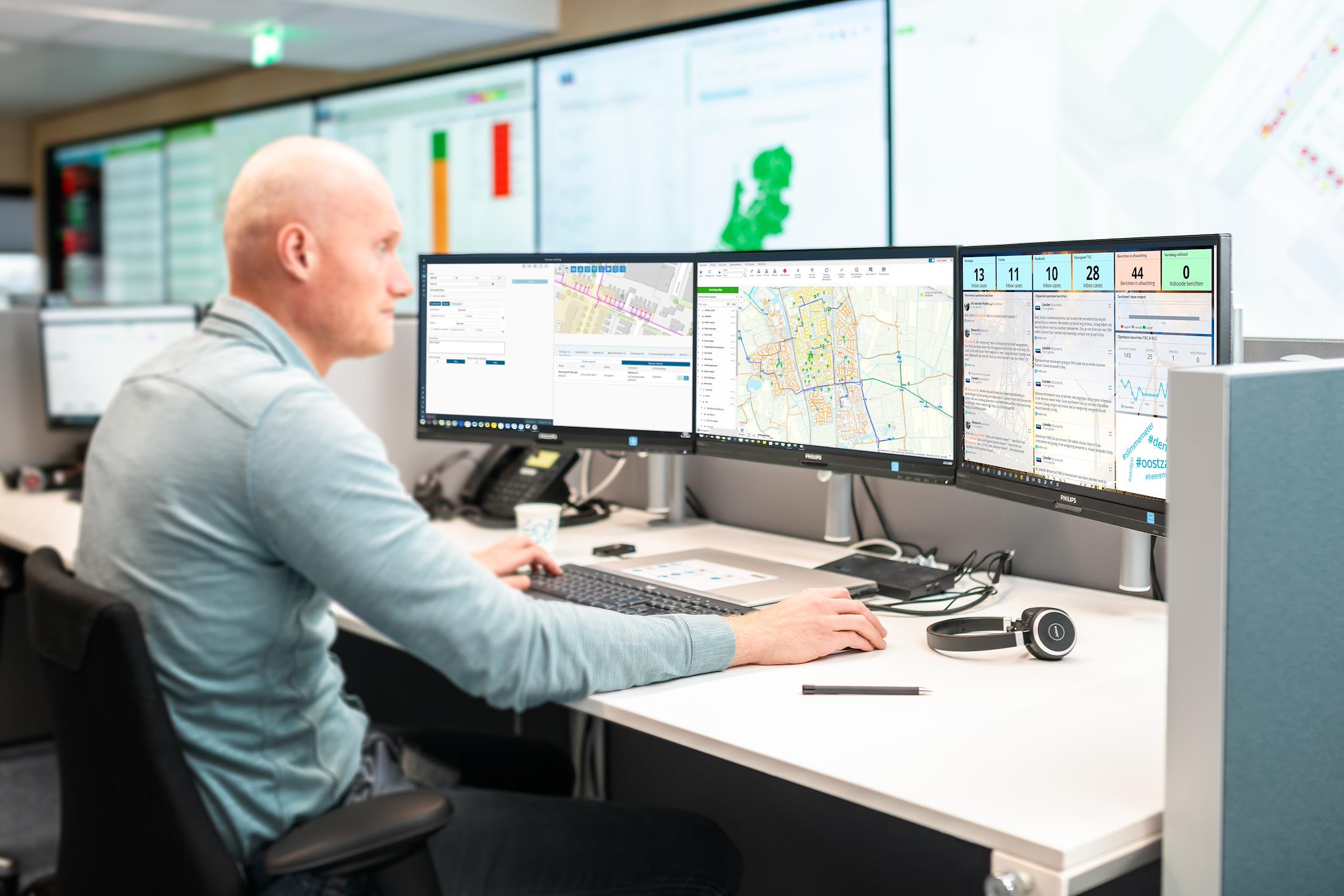
Alliander continuously invests in resilience in order to assure its role as a vital player in Dutch society and to retain the trust of customers and shareholders. In recent years, we have seen an increase in the complexity of threats, such as geopolitical tensions, AI-driven cyber attacks, drones and physical sabotage, internal threats, climate risks and digital dependencies. This makes an integrated security approach essential. Alliander is structurally strengthening its defences against digital and physical threats through a professional crisis response organisation and an integrated security strategy, in line with legislation such as the European NIS2 Directive. We focus on prevention through a layered security architecture with defined zones in our buildings, which we updated in 2025. New security KPIs encourage teams to address vulnerabilities in a timely manner, conduct audits and increase security awareness. We also collaborate with other parties to increase knowledge and skills.
Digital resilience and dependency management
A reliable and future-proof energy supply requires digital resilience and flexibility. In concrete terms, this means that critical digital processes must remain controllable for Alliander, even in the event of disruptions, and that dependencies on technology and suppliers must be carefully assessed. Digital choices are increasingly subjected to scrutiny in connection with risks in terms of continuity, recoverability and long-term dependency. This applies in particular to the choice of (US-based) cloud services, where Alliander focuses on conscious deployment, transparency in dependencies and maintaining sufficient control over critical processes.
In 2025, action was taken in line with this approach to further secure the manageability of critical digital chains. In addition, much attention is also given to clear frameworks, mutual coordination and collaboration within the sector. We are actively preparing for risks by developing scenarios, investigating alternatives and making continuous adjustments through policy and joint action, including in collaboration with other network operators.
We also developed continuity plans and drew up disaster recovery plans for digital systems. Finally, we ensure that disruptions are dealt with more quickly and that their impact is limited. In 2025, Alliander conducted a large-scale exercise simulating digital and physical threats. This simulation improved collaboration, response procedures and awareness, and the lessons learned have been incorporated into policy and processes.