


General prosperity means that, in addition to creating economic value, we also consider our social and ecological contribution to society. We want to avoid passing on unnecessary costs to future generations or deflecting problems to other vulnerable regions. In our general prosperity approach, we monitor the pace of the energy transition and are committed to making it ecologically and socially fair.
That is why we set targets in the areas of climate, circularity and good employment practices, and report on our social impact. This approach also links us to ESRS, ensuring that our reporting methods comply with European reporting standards and that our social performance is presented in a consistent, comparable and future-proof manner.
Our approach to general prosperity is based on six types of capital: financial, manufactured, intellectual, human, social and natural capital. Together, these six types of capital form the foundation for our policy and for measuring and managing impact. As a result, general broad prosperity is not just an ambition: it is a clear guiding principle in our daily work. The method we use helps us make choices and gives us an accurate indication of the social costs and benefits.
Our Sustainability and Corporate Responsibility report
This year, we are publishing our sustainability and corporate report for the tenth time as part of the annual report. Managing based on general prosperity requires fundamental change and is a long-term process. That is precisely why we are particularly proud of this integrated sustainability and corporate report, marking ten years of accurate disclosure of information on our social impact.
In our impact model (presented later in the report), we quantify and monetise the impact in terms of where we make the largest contribution to society in our direct activities and in the value chain. We have described the other indicators qualitatively and made an estimation on the basis of external sources. Value chain impacts are effects for which parties in the value chain are jointly responsible.
Main developments in 2025
In economic terms, we see that our contribution to consumer well-being through gas and electricity transmission has increased significantly because end users have consumed more energy at lower energy costs per m³ and kWh compared to 2024. This is despite the fact that the network management costs for electricity have increased.
Our negative impact on the climate is decreasing. The carbon emissions from our own business operations increased slightly due to stricter policies (Science Based Target initiative) that exclude a form of CO₂ compensation. However, due to progress made in the energy transition, the emission coefficient per kWh of transmitted electricity has fallen. This, together with the reduction in network losses, will lead to a decrease in the impact on climate change of €12 million in 2025 compared to 2024.
Our negative impact from waste has increased. Due to a significant increase in project work, we also saw a corresponding increase in the amount of waste (+20%). Nevertheless, our efforts in the area of responsible waste management have ensured that the percentage of waste that is recycled has remained the same (84%).
The positive impact on human capital has mainly increased due to a growing workforce. Fortunately, the negative impact in terms of the number of accidents has remained virtually unchanged. Long-term absenteeism increases the negative impact.
Capital value decrease
(€ million)
Capital value increase
Financial capital
Manufactured capital
Intellectual capital
Natural capital
Social capital
Human capital
Capital value decrease
Capital value increase
Most notable changes to impact in 2025
The section below explains the most notable (positive and negative) impact-related developments in 2025 compared to 2024. The models and method remained unchanged in 2025. Indexation for inflation (etc.) has been applied and some secondary data sources have been updated. In the comparative figures, the figures are compared with the impact in previous years. For a complete overview of the impact in 2025, please refer to the detailed explanatory notes to the impact model. For the basic principles and calculations, please refer to the detailed explanation of the impact indicators.
Manufactured capital: contribution of gas and electricity transmission to consumer well-being
Impact on well-being due to gas transmission in 2025: €1,426 million (2024: €1,300 million)
Impact on well-being due to electricity transmission in 2025: €3,279 million (2024: €2,894 million)
We create value for consumers with Alliander's gas and electricity network. This value is reflected in the perceived well-being that comes from reliable access to energy. In 2025, this well-being value increased compared to 2024: by 9.7% for gas and by 13.3% for electricity. In 2025, the number of connections to our electricity grid increased by approximately 1%. Unlike gas transport, we saw hardly any increase in the amount of electricity (+0.4% compared to 2024).
The falling price of electricity leads to increased well-being for consumers. At the same time – unlike gas – electricity transmission tariffs actually increased. This also led to an increase in transmission revenues, resulting by extension in an increased contribution to consumer well-being from Alliander's perspective. On the other hand, the decline in the electricity price has caused the perceived well-being of consumers through the feed-in of solar energy to fall from €147 million* in 2024 to €118 million in 2025. Due to the fall in price, the use of self-generated energy and feed-in resulted in a reduced financial advantage compared to households without solar panels.
- *This positive impact has been corrected due to a change in scope. 2024 Annual Report: €157 million. For an explanation, see the comparative figures.
Natural capital: contribution to climate change
Impact in 2025: €280 million negative (2024: €279 million negative)*
In 2025, there were several developments that had a reinforcing effect on Alliander's negative climate impact. First, the indexation of the CO₂ price meant that the impact of emissions was given greater weight. In addition, Alliander no longer offset its entire carbon emissions, which led to a further increase in the climate impact. The slightly higher transmission level, particularly of gas but also electricity, compared to the previous year also contributed to this, while our network losses decreased.
However, these developments were offset by a significant positive change. The carbon emissions per unit of electricity dropped further as a result of the transition to more sustainable electricity production. This is partly due to the influence of the increase in the number of households with solar panels. This effect was so strong that it completely offset the negative influences previously mentioned. On balance, this resulted in an almost unchanged contribution to climate change in 2025 compared to 2024. Due to increasing transmission volumes and the partial loss of compensation for Alliander’s own emissions, major efforts will also be required in the coming years to meet the climate targets for 2030 and 2050.
- *This negative impact has been corrected by indexing the CO2 price. 2024 Annual Report: €269 million negative. For an explanation, see the comparative figures.
Natural capital: Environmental damage due to waste
Impact in 2025: €133 thousand negative (2024: €103 thousand negative)
In 2025, we launched many projects and invested a record amount in our energy networks. The sharp increase in work has led to a 20% increase in the amount of waste compared to 2024.
Although we focused strongly on circular waste processing, the ecological damage caused by waste has nevertheless increased by 29% over the past year compared to 2024. This is because the processing method used for waste that could not be recycled caused greater ecological damage compared to the previous year. The total increase in environmental damage can therefore not only be attributed to the increase in volume, but also to the composition of the waste and the increased costs of waste processing.
Despite an increase in the amount of waste, we succeeded in holding the percentage of recycled waste at the same level (84%). The proportion that could not be recycled and was therefore incinerated has been accounted for in the 'commercial waste' category for 50%. The challenge is to further reduce waste flows. To achieve this, we will continue to focus on circular waste processing in the coming years through prevention, reuse, recycling and, where possible, better separation of waste flows.
Human capital: Impact caused by work-related sickness absence and employee accidents
Impact in 2025: €1.5 million negative (2024: €1.0 million negative)
In 2025, the impact of work-related sickness absence rose relative to 2024. This increase is linked to the considerable growth in Alliander’s workforce. A significant portion of the increased impact is explained by long-term sickness absence. In addition, the social value assigned to sickness absence has increased compared to 2024. This contributes to the remaining portion of the total increase. Despite the growth in the workforce, the number of accidents has remained virtually the same. This demonstrates that our commitment to a safe and healthy working environment is having effect.
General prosperity in practice – business case studies
Our Sustainability and Corporate Responsibility report paints the overall picture of the impact we have on the six capitals. This impact can be traced back to the choices we make within our business operations. We constantly seek ways to reduce negative effects and reinforce positive effects. We do this by challenging the status quo: we explore alternatives to existing policies and look at how we can make more impactful choices. Every year, we conduct several qualitative and quantitative impact analyses in respect of proposed projects and choices, thereby contributing to well-considered decision-making. In this report, we highlight two current business case studies that we initiated in 2025, each involving an issue with a specific impact in relation to our business operations and our environment.

Reuse of power transformers
In order to facilitate the energy transition, intensive efforts are being made to expand the electricity grid. To achieve this, power transformers are installed in the grid every year, or old transformers are replaced by new, more powerful versions.
Situation and study question
In grid upgrade projects, power transformers that are functioning perfectly well are often written off prematurely because they do not comply with the recently introduced standard for modular construction. Although these projects are essential for the energy transition and increasing operational reliability, replacing fully functional transformers leads to higher costs and a higher ecological impact. This is diametrically opposed to Alliander's objective of achieving an affordable and sustainable energy supply. In addition, the current shortage of transformers and personnel is causing unpredictability in the supply of new equipment. In order to limit the impact, research has been carried out to determine whether transformers can be kept in operation for longer by upgrading them. Two scenarios were compared with each other in an impact study:
Using new transformers in grid upgrade projects
Upgrading existing power transformers in accordance with the standard
Key results
Upgrading power transformers leads to the following pros:
Reduction of greenhouse gas emissions through reduced transport and material use.
Increased security of supply through shorter connection times and fewer minutes of restricted transmission.
Strengthening of Alliander's market position because it acts as a good employer and focuses on innovation, knowledge development and reliability.
The cons are as follows:
Higher network losses compared to newly built transformers.
Despite these higher network losses, reusing a transformer delivers more social value than installing a new transformer, thanks to the shorter connection time and the CO₂ impact that is thereby avoided. After approximately 18 years, the social costs of redeployment exceed the social benefits.
Social costs of redeployment (€ million)
Follow-up
Based on these results, a field test will be initiated in which an 'old' transformer will be tested in the field. This test should reveal whether the use of a second-hand transformer actually contributes to achieving Alliander's objectives and accelerates the energy transition towards a sustainable and affordable energy supply.
Optimal use of fibre-optic connections (for business operations and communication)
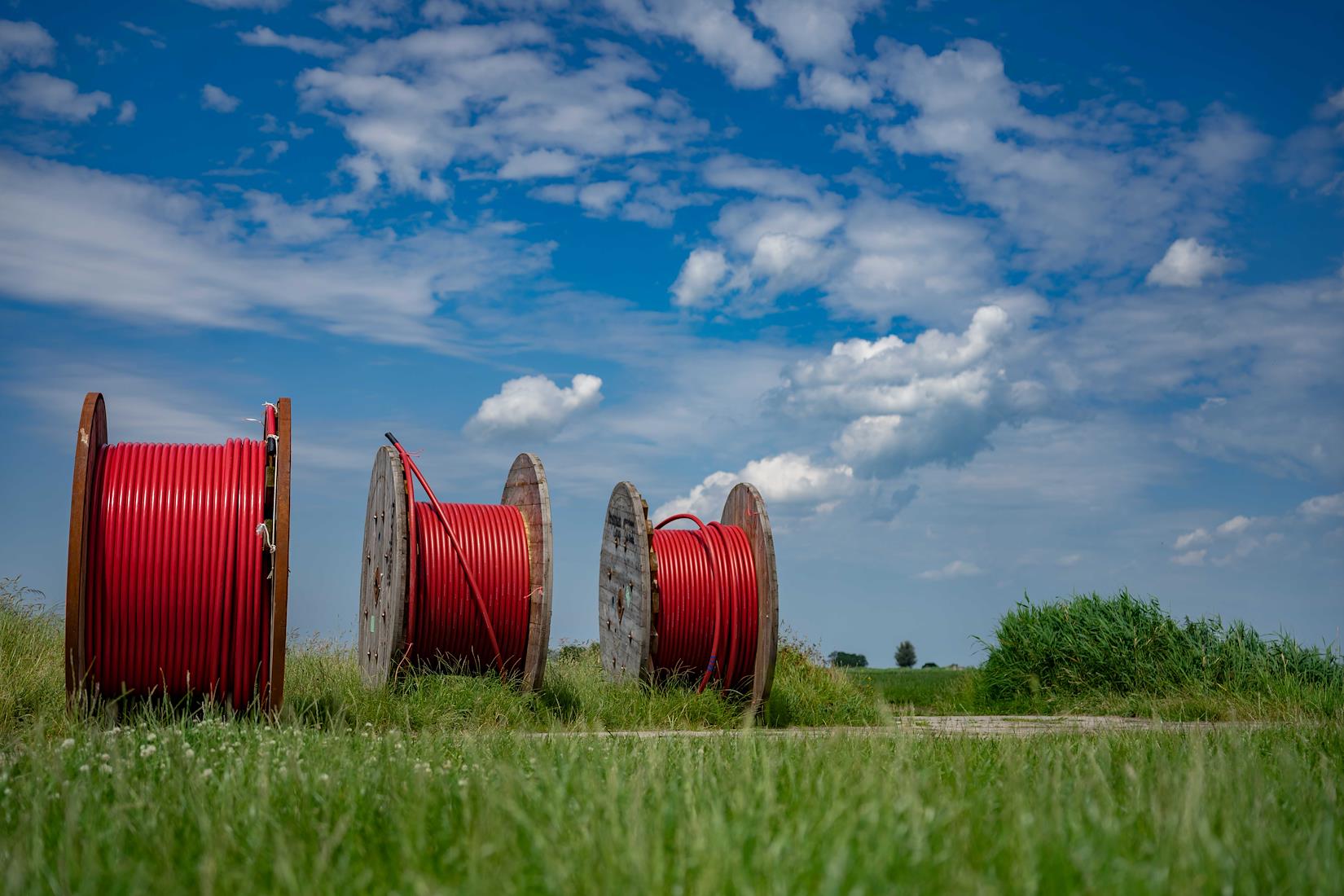
In the case of applications that place very high demands on the reliability and availability of telecom connections, such as measuring equipment in the electricity grid and for data communication and control, Alliander uses fibre-optic networks. This is managed partly in-house and partly by leasing capacity on third-party fibre-optic networks.
The required reliability is achieved through the use of separate fibre-optic cables and high-quality equipment. The network is designed in such a way that messages can quickly reach the company operations centre via multiple routes. Due to increasing complexity and the risk of disruption to the existing network, an impact study was conducted to assess how alternative scenarios score in terms of their social impact and how they meet the requirements of a future-proof, reliable and secure network.
Situation and study question
To ensure reliable communication between our company operations centres in the west and east of the Netherlands, the dual operational fibre-optic connection needs to be upgraded. This can be achieved in three ways:
Utilising existing fibre-optic lines of the infrastructure companies collaborating in the FiberFederatie – a platform where excess capacity of public and semi-public parties can be leased by other participating parties.
An extension under our own management and ownership.
Leasing existing connections from third parties.
Key results
The impact comparison of the three options shows that collaboration with the FiberFederatie has the most favourable impact on general prosperity for most capitals.
Due to the excavation work required, this option still results in a minor adverse impact in terms of climate, raw materials and costs of the work, but much less so than the option of expanding under Alliander’s own management.
In terms of financial capital, more than €5 million in construction costs will be saved compared to building our own facilities, and €0.5 million compared to commercial lease.
The FiberFederatie option results in reciprocal collaboration with efficient capacity utilisation and greater reliability than the commercial lease option.
The collaborative element promotes the coordination of maintenance and prevention of faults, and encourages knowledge sharing and development, allowing innovations to be implemented more quickly.
There is less disruption to the surrounding area due to limited construction work.
Conclusion
The analysis regarding the construction of a new fibre-optic connection reveals which option offers the greatest financial savings and which scenarios score better in terms of sustainability, reliability and collaboration. The FiberFederatie solution results in lower carbon emissions and material usage, and causes less disruption. The approach makes the decision-making process more transparent, better substantiated, future-proof and provides insight into particular interests. This helps us to make choices that are in line with both our strategic goals and our social responsibility as a network operator.